Discover how to use AI sales prompts for cold email outreach, LinkedIn prospecting, follow-up messages, objection handling, CRM automation, and paid advertising to build a more organised sales process for your small business.
Why Most Small Businesses Need a Better Sales Process
Finding customers is one challenge. Turning potential customers into paying clients is another.
You might spend your morning researching prospects, your afternoon writing outreach emails, and your evening trying to remember which leads need a follow-up. If you also manage marketing, customer service, and daily operations, sales can easily become a collection of unfinished tasks.
The problem is not always a lack of effort. Sometimes, it is a lack of a repeatable system.
Artificial intelligence can help with many of these tasks. It can draft sales emails, suggest outreach angles, organise prospect information, prepare answers to common objections, and help you create advertising copy. However, the quality of the output depends heavily on the instructions you provide.
A vague request such as “write a sales email” gives an AI assistant very little context. A structured prompt that explains your audience, offer, desired action, tone, and constraints gives it a much clearer direction.
That is where a dedicated collection of AI sales prompts becomes useful.
What Is an AI Sales Prompt?
An AI sales prompt is an instruction that tells an AI assistant how to help with a specific sales task.
For example, you might ask AI to draft a cold email for a particular type of customer, write a polite follow-up after a product demonstration, or suggest responses to objections about price.
A useful prompt does more than name the task. It provides the information the AI needs to produce a relevant draft.
This might include:
- Your product or service and its main benefits.
- The audience you want to reach.
- The problem your offer helps address.
- The customer’s likely concerns.
- The tone and length of the message.
- The next action you want the reader to take.
You can then review the draft, correct any unsupported claims, and adapt the message to the individual prospect.
The goal is not to let AI replace your judgement. It is to reduce repetitive drafting and help you approach sales tasks more consistently.
Discover 215+ AI Prompts for Sales and Lead Generation
AI Prompts for Sales & Lead Generation by Kurt Bai is designed for small business owners, solo entrepreneurs, and lean sales teams who want practical AI instructions without spending hours learning prompt engineering.
The book contains more than 215 sequentially numbered, copy-paste-ready prompts across 13 focused chapters. Its coverage extends from prospecting to closing, with additional material on niche-specific applications, automation, and prompt maintenance.
Rather than giving you a few generic examples, the book offers a structured prompt library that you can adapt to your own business.
1. Cold Outreach and Sales Email Writing
Cold outreach can be difficult because the same message rarely works for every audience.
A local service provider, a SaaS company, and a freelance consultant may all need to contact potential customers, but their offers, audiences, and buying considerations are different.
AI can help you draft different versions of an outreach message, test alternative opening lines, and make the value proposition clearer.
For example, a prompt can instruct AI to write a concise introduction for a particular customer segment, explain a relevant problem, and suggest a natural next step without making exaggerated claims.
You still need to check the details and ensure your outreach follows applicable email and privacy rules. However, a structured starting point can make the writing process more manageable.
2. LinkedIn Prospecting and Messaging
LinkedIn can help professionals identify potential customers, build relationships, and start business conversations.
The challenge is communicating without sounding generic or overly promotional.
AI can help you draft connection messages, follow-up notes, and conversation starters based on information you have legitimately gathered about a prospect. You can also ask it to produce variations for different industries or customer roles.
The important step is personalisation. A message should reflect a real reason for contacting someone, not simply insert their name into a mass-produced sales pitch.
3. Follow-Up Messages That Keep Conversations Moving
A prospect may show interest without making an immediate decision. They may need more information, discuss the purchase with a colleague, or simply become distracted.
A well-timed follow-up can reopen the conversation without pressuring the recipient.
AI can help you prepare different follow-up messages for different situations, such as after an initial enquiry, a product demonstration, a proposal, or a period of silence.
Instead of sending the same message repeatedly, you can give AI the context of the previous conversation and ask it to draft a relevant, respectful next step.
4. Objection Handling and Sales Conversations
Price, timing, uncertainty, and perceived risk can all become obstacles during a sales conversation.
AI can help you prepare for common objections by generating possible responses, clarifying the value of an offer, and suggesting questions that help you understand the customer’s actual concern.
For example, you could ask an AI assistant to prepare three responses to a prospect who says the service costs too much: one focused on clarifying the value, one exploring the prospect’s requirements, and one offering a smaller starting option if your business genuinely provides one.
These drafts are preparation tools, not scripts to follow blindly. Your response should reflect the customer’s circumstances and the actual terms of your offer.
5. Paid Advertising and Sales Copy
Advertising requires a clear message, a relevant audience, and a reason for someone to act.
AI can help you explore alternative headlines, ad copy, calls to action, and value propositions. You can use it to create variations for different customer segments or platforms.
This makes it easier to prepare ideas for testing rather than relying on a single draft.
However, AI-generated advertising should always be reviewed. Check product descriptions, prices, promotional terms, testimonials, and performance claims before publishing. Do not assume that a persuasive sentence is automatically accurate or compliant.
6. CRM Automation and Repeatable Workflows
Customer relationship management (CRM) systems help businesses organise leads, conversations, and sales activities.
AI prompts can support the preparation of lead summaries, follow-up tasks, email sequences, and structured information for spreadsheets or CRM records.
The book also includes an integration playbook covering ways to connect prompts with email sequences, spreadsheets, Zapier, and chatbots.
You do not need to automate everything immediately. Start with a task you repeat often, define the information required, and test the workflow before expanding it. Check any integrations carefully before allowing them to send messages or modify customer records automatically.
How to Use AI Sales Prompts Effectively
A prompt library is most useful when it becomes part of your daily process.
Start by identifying one sales task that takes too much time. Perhaps you repeatedly write introductory emails, prepare proposal follow-ups, or create different versions of an advertisement.
Next, select a prompt that matches the task. Replace its bracketed placeholders with your actual business details, target audience, offer, and desired outcome.
Review the result before using it. Check names, product details, prices, claims, tone, and the proposed call to action. Remove anything that sounds unnatural or promises something you cannot deliver.
Finally, keep a record of the prompts and message variations you use. Note which approaches generate meaningful replies, qualified enquiries, or useful conversations. Your own results can guide future improvements, although they will depend on your offer, audience, market, and execution.
This process turns AI from an occasional writing assistant into a more organised part of your sales workflow.
Prompts for Different Industries
Sales processes vary across industries, so generic prompts may need substantial adaptation.
The book includes three niche-vertical mini-chapters with prompts for real estate, SaaS, and health and wellness businesses.
A real estate professional may need help preparing property enquiry follow-ups. A SaaS business may want to communicate product benefits or respond to questions about subscriptions. A health and wellness business may need careful, accurate messaging that respects the boundaries of its services and applicable advertising rules.
These examples illustrate why context matters. The same basic sales framework can be adapted to different audiences, but the details must reflect the actual business.
Build a Sales Prompt Library You Can Maintain
AI tools and business offers change. A prompt that works well today may need adjustment when your target audience, product, or sales process changes.
The book includes a printable cheat sheet featuring 15 selected prompts for quick reference, alongside a prompt-maintenance checklist.
You can use these resources to organise your most useful instructions, keep frequently used prompts accessible, and review them as your business evolves.
A simple starting system could include separate groups for prospecting, first contact, follow-ups, objection handling, advertising, and CRM tasks. Store the prompts alongside notes about the situations in which they are useful.
Review the outputs regularly. If AI repeatedly produces vague openings, unsupported claims, or messages that do not sound like your business, improve the instructions rather than accepting the same problems every time.
Who Should Read This Book?
AI Prompts for Sales & Lead Generation is particularly relevant to:
- Small business owners who handle sales and marketing themselves.
- Solo entrepreneurs and freelancers who need a more organised way to approach prospects.
- Lean sales teams that want reusable starting points for common sales tasks.
- Real estate professionals seeking help with prospect communication and follow-ups.
- SaaS businesses looking for ways to structure outreach and sales messaging.
- Health and wellness businesses that need adaptable sales communication while maintaining accuracy and appropriate boundaries.
You do not need to be a prompt engineer to get started. The book is designed around copy-paste prompts and replaceable placeholders, so you can adapt the instructions to your own situation.
Make Your Next Sales Task Easier to Start
Writing every email from scratch is not the only way to manage sales communication. With structured prompts, you can create a starting draft, adapt it to your audience, and spend more attention on the parts of selling that require your judgement.
The 215+ prompts in AI Prompts for Sales & Lead Generation cover cold outreach, LinkedIn messaging, follow-ups, paid ads, objection handling, CRM automation, and more. The additional cheat sheet and integration playbook provide practical ways to organise and use the prompts.
Ready to build a more organised AI-assisted sales workflow?
You can also use the prompt library as a reference whenever you need to prepare a new outreach message, improve a follow-up, or plan a sales workflow.
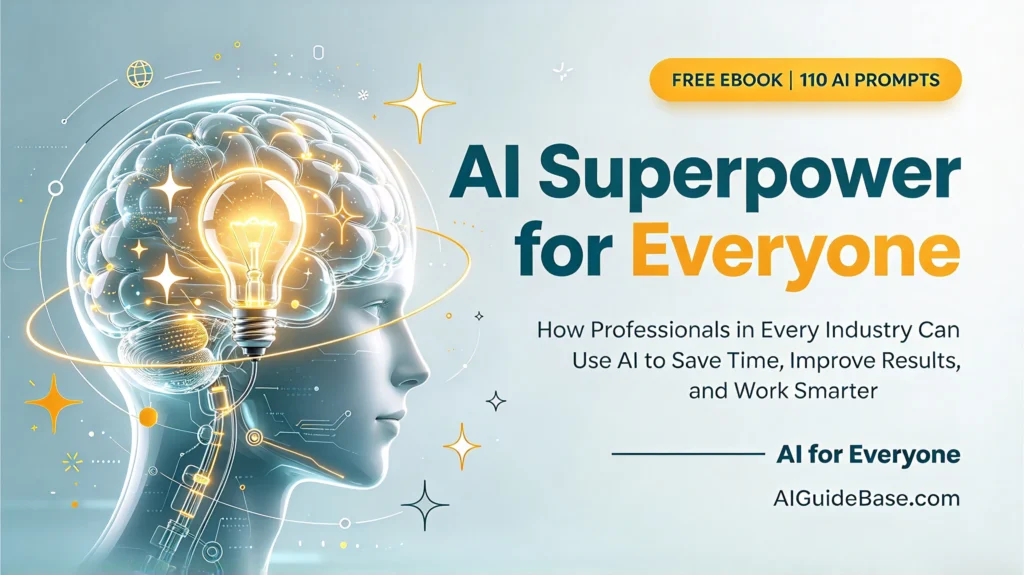
And if you want to explore more ways to use AI in your work, download the free ebook AI Superpower for Everyone.
Start with one repetitive task, test a suitable prompt, and improve the process as you learn what works for your business.